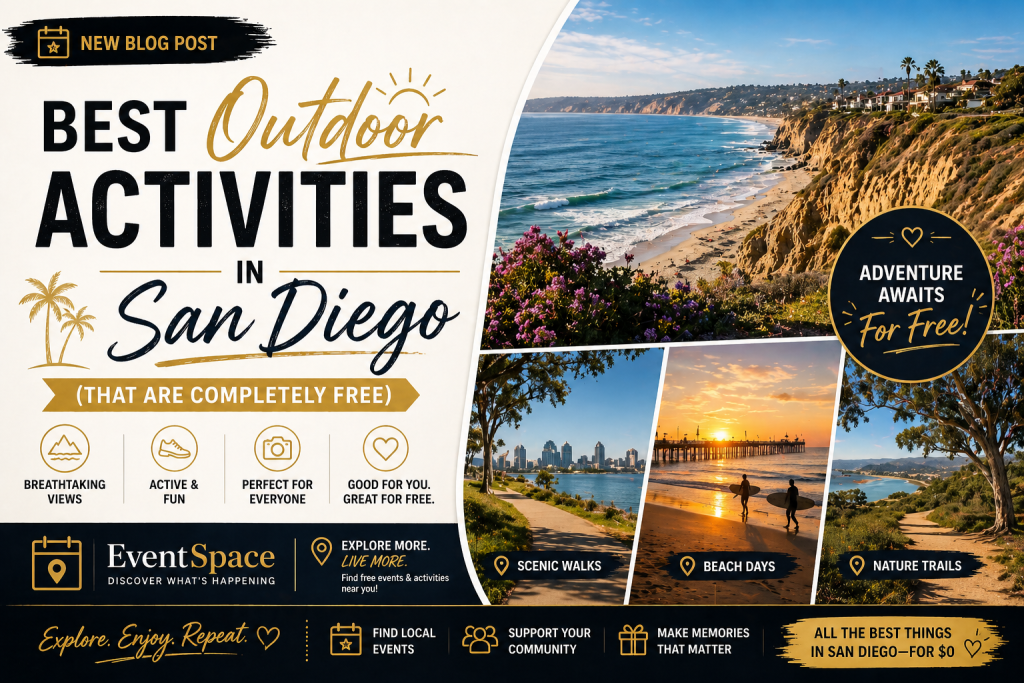

You’d think finding free events would be easy—type a quick search, pick something fun, and go. In reality, it often turns into a scroll-heavy process filled with expired listings, “free” events that aren’t actually free, or pages that haven’t been updated in months. If you’ve ever given up halfway through searching, you’re not alone. The trick isn’t searching harder—it’s knowing exactly where (and how) to look so the good stuff comes to you faster. With a simple system and a few go-to sources, you can make discovering free events part of your routine instead of a once-in-a-while headache.
1. Check Local Event Platforms 🔎
Instead of bouncing between random websites, start with platforms built specifically for event discovery. Websites like EventSpace let you filter by price, which immediately cuts out the noise. A small but powerful habit: sort by “date” and “free,” then revisit every few days—this is where you’ll catch newly added events before they get crowded.
2. Use Social Media (Facebook Groups, etc.) 📱
Some of the best free events never make it to big platforms—they live on social media. Facebook pages like Free Events in San Diego regularly share local happenings, as well as Instagram accounts like @free_events_sd. Once you engage with a few posts or join groups, the algorithm starts doing some of the work for you by surfacing similar events in your feed. To make this more intentional, turn on notifications for a handful of your favorite groups or pages so you don’t miss time-sensitive posts.
3. Visit City & Community Websites 🏛️
It might not be the flashiest option, but your city’s official website is often one of the most reliable. Look for sections labeled “Events Calendar” or “Things to Do”. Local governments and community organizations tend to promote free, cultural festivals, park events, and seasonal activities that are easy to miss elsewhere. You can also checkout our local library, parks and recreation department, and neighborhood councils as well. These calendars are usually curated and kept up to date, which means fewer dead links and surprise fees. If you find a few you like, bookmark them and quickly skim them when you’re planning your week.
4. Look for Recurring Weekly Events 📅
If you find yourself searching every weekend, you’re making it harder than it needs to be. Many free events follow a predictable rhythm—weekly farmers markets, monthly art walks, sunset yoga sessions, or trivia nights at local spots. Once you lock in a few of these, you essentially build your own go-to list, which means less searching and more showing up.
5. Use EventSpace (A Simpler Way to Browse) 🧭
After checking a few sources, it helps to have one place that brings everything together. EventSpace, for example, is designed to surface a mix of events—from free community gatherings to larger experiences—in one place. Instead of hunting across different sites, you can scroll once, filter quickly, and get a clearer picture of what’s happening around you. Use the filters to narrow by date, neighborhood, and “free” so you’re only seeing what actually fits your budget and schedule.
Conclusion
Finding free events doesn’t have to feel like a chore. Once you shift from scattered searching to a more intentional system—checking a few trusted platforms, tapping into social feeds, and relying on recurring events—you’ll spend less time looking and more time actually enjoying what’s around you. Build a small routine, keep your sources tight, and let tools like EventSpace do some of the heavy lifting. Do that consistently, and you’ll always have something to do without the extra effort or extra cost.